How to Choose Tyres for a Pickup: Load Range and Tread
A pickup works harder than most vehicles. It may carry heavy loads, run on bad roads and still be your everyday transport. Tyre choice has a bigger effect on safety and running costs than on a family car. This guide covers the points that matter most for pickups, beyond the general advice in how to choose tyres for an SUV or pickup.
Short version: pick a tyre with the load range your pickup needs, set the pressure for your actual load, and choose the tread for the roads you really drive. Mud-terrain tyres are only worth it if you regularly drive on soft, muddy ground.
Understand load range
Light-truck (LT) tyres carry a load range letter, such as C, D or E. This shows how strong the tyre's construction is and how much pressure it can take. Higher letters mean stronger tyres.
| Load range | Ply rating | Typical use |
|---|---|---|
| C | 6 | Light-duty use |
| D | 8 | Moderate loads |
| E | 10 | Heavy loads, towing, rough work |
The ply rating is a strength rating, not a count of actual layers. Follow your vehicle's placard, and do not fit a tyre with a lower load index than the original.
Match the pressure to the load
- An empty pickup needs a lower pressure than one carrying a heavy load. Your placard or manual often lists both.
- Carrying a heavy load on soft tyres makes them overheat. Overheating is a common cause of tyre failure in hot weather.
- Check pressures when the tyres are cold. See correct tyre pressure in hot weather.
- Do not exceed the maximum pressure on the tyre sidewall.
Choose the tread
Highway-terrain
Best if most of your driving is on tar. They are quieter, wear slowly and grip well in the wet.
All-terrain
A good all-round choice for mixed tar and gravel. See all-terrain vs highway tyres.
Mud-terrain
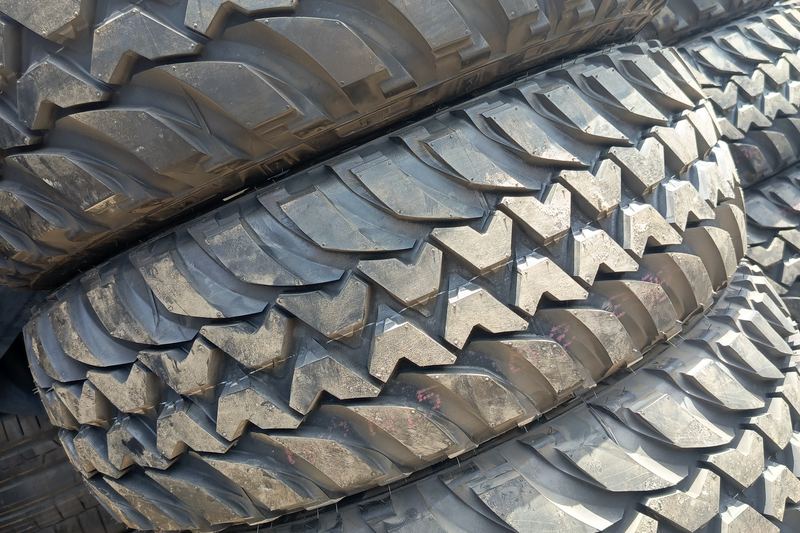
These have large blocks and wide gaps that dig into mud and loose ground. The trade-offs are real:
- More road noise and a harsher ride on tar
- Faster wear on hard roads
- Usually less grip on wet tar than a highway tyre
- Higher fuel use
If you only occasionally leave the road, an all-terrain tyre is usually the smarter choice.
Size and speedometer
Larger LT sizes look good, but they change your speedometer reading and can rub against the body. See how tyre size changes your speedometer reading.
Do not forget the spare
- Fit a spare of the same size and type as the other tyres, so that you can swap it in safely.
- Check its pressure and age regularly.
- If you carry a full-size spare, consider including it in your tyre rotation.
Check the age and the seller
Look at the date code before you buy, and avoid old stock. See how to check how old a tyre is and how to spot fake, refurbished or old-stock tyres.
Look after them
- Do not overload the vehicle. Check the payload figure in your manual.
- Rotate regularly and check alignment. See tyre rotation, balancing and wheel alignment.
- Inspect for cuts and stone damage after rough drives.