How to Replace a Car Battery Safely, Step by Step
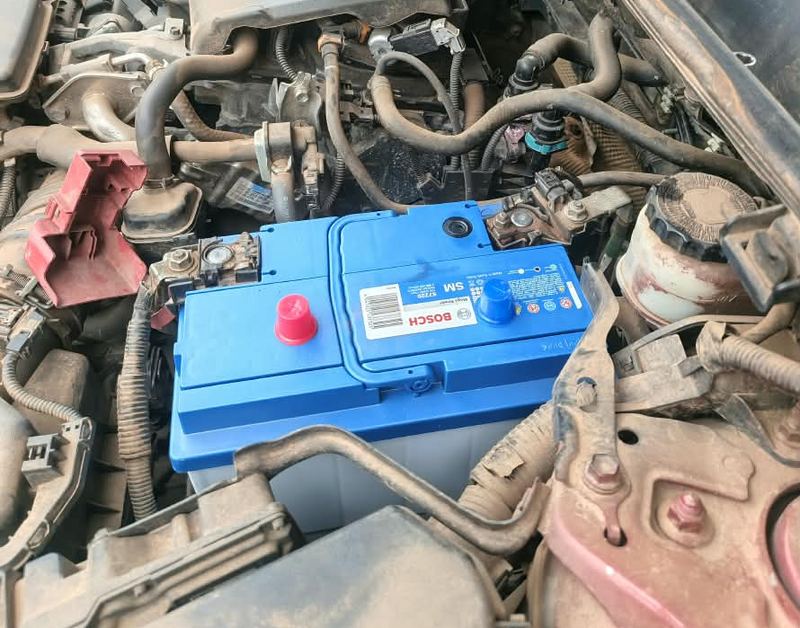
Replacing a car battery is one of the simpler jobs you can do yourself, and it takes about 20 to 30 minutes. The main dangers are sparks, acid and shorting the terminals with a tool, and all of them are easy to avoid if you follow the right order.
Short version: disconnect the negative terminal first, then the positive. Fit the new battery, connect the positive first, then the negative. Make sure the new battery has the same size and terminal position.
Before you start
- Check your manual. Some cars, especially those with start-stop systems, need the new battery to be registered with the car's computer.
- Check you have the right battery. Compare size, terminal position and rating with the old one. See car battery size codes explained.
- Test the old one if you are not sure it is faulty. See how to test a car battery.
- Note any radio code or settings the car may lose when the power is cut.
What you need
- Spanners or a socket set that fit the terminal clamps and the hold-down bracket
- Eye protection and gloves
- A wire brush or terminal cleaner
- Baking soda, water and a cloth
- Petroleum jelly or terminal protector
Step by step
- Park on level ground, switch off the engine, remove the key and turn off everything electrical.
- Identify the terminals. Positive has a plus sign and often a red cover. Negative has a minus sign.
- Disconnect the negative terminal first. Loosen the clamp nut, lift the clamp off and tuck it away so that it cannot touch the post.
- Disconnect the positive terminal. Take care that your spanner does not touch any metal part of the car while it is on this terminal.
- Remove the hold-down. This is the bracket or strap that keeps the battery in place.
- Lift the battery out, keeping it upright. It is heavy, often 10 to 20 kg or more, so lift with your legs and take care not to tip it.
- Clean the tray and clamps. Remove dirt and corrosion. See how to clean battery terminal corrosion.
- Place the new battery in the tray with the terminals on the same sides as before.
- Refit the hold-down so that the battery cannot move.
- Connect the positive terminal first, then the negative. Tighten each clamp so that it does not turn on the post.
- Coat the terminals with a thin layer of petroleum jelly or terminal protector, and refit any covers.
- Start the car and check that the lights, dashboard and accessories work. Reset any settings you need to.
Common mistakes
- Connecting the terminals the wrong way round, which can damage fuses and electronics
- Letting a spanner bridge the positive terminal and the car body
- Overtightening and cracking the terminal or clamp
- Leaving the hold-down loose, so that the battery vibrates
- Fitting a battery with the terminals on the wrong side, which leaves cables stretched
Dealing with the old battery
An old battery contains lead and acid, so it must not go in ordinary rubbish or be poured out or burned. Keep it upright and take it to the seller or a battery recycler. Many sellers will take it back, sometimes with a discount, so ask when you buy.
After fitting
- Drive for at least 20 to 30 minutes so that the alternator can top up the charge.
- Keep the receipt and warranty.
- If the new battery goes flat soon, check the charging system and for a drain. See why does my car battery keep dying?