How to Choose the Right Car Battery for Your Vehicle
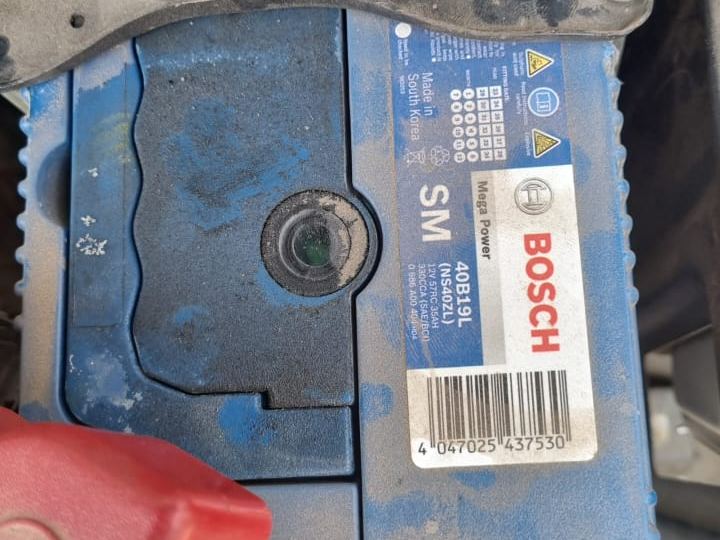
Buying a car battery can feel like guesswork, because the labels are full of abbreviations. The good news is that only a handful of details really matter. Get these right and you will have a battery that fits, starts your engine reliably and lasts.
Short version: match the physical size and terminal layout, meet or exceed the capacity and cold-cranking amps your car needs, choose the right battery type, and check the manufacture date before paying.
1. Physical size and terminal position
The battery must fit in the tray and the cables must reach the terminals. Check the length, width and height of the old battery, and note which side the positive terminal is on. Many batteries come in a "reversed" version with terminals on the opposite side, and cables that do not reach can be a safety hazard.
Also check the type of terminal post and the hold-down arrangement, since different cars use different clamps or brackets.
2. Capacity (Ah)
Capacity is measured in amp-hours (Ah). It tells you how much energy the battery can store. Small cars often use batteries of around 40 to 60 Ah, while larger cars, SUVs and diesels commonly need 70 to 100 Ah or more. Use your owner's manual or the label on your old battery as the starting point. A slightly higher capacity is fine as long as it physically fits, but going lower can leave you short of power.
3. Cold-cranking amps (CCA)
CCA shows how much current the battery can deliver to start the engine. Diesel engines and large petrol engines need more than small petrol engines. Even in a warm country, do not choose a battery with a lower CCA rating than the original, because starting draws the most current of anything your car does.
4. Battery type
| Type | What it is | Best for |
|---|---|---|
| Flooded (lead-acid) | Traditional design, some need topping up with distilled water | Older and basic vehicles |
| Maintenance-free | Sealed version of the flooded design | Most everyday cars |
| EFB | Enhanced flooded battery with better cycling | Cars with basic start-stop |
| AGM | Sealed, absorbent glass mat, handles heavy electrical loads | Start-stop cars and vehicles with many electronics |
If your car came with an AGM or EFB battery, replace it with the same type. A standard battery in a start-stop car will wear out quickly.
5. Manufacture date
Batteries lose charge slowly while sitting on a shelf. A battery that has been in a shop for a year or more may already be weakened before you install it. Many batteries carry a date sticker or stamped code, often showing the month and year. If you cannot find or understand it, ask the seller. Choose the freshest stock you can, ideally less than six months old.
6. Warranty and seller
Read the warranty terms. Ask how long it lasts, what it covers and whether the seller will test or replace the battery if it fails early. Keep your receipt. A battery from a seller who stands behind it is worth more than a slightly cheaper one with no support.
7. Check before you leave
- Confirm the case has no cracks, leaks or bulges.
- Ask for a voltage reading. A new battery should show about 12.6 V or higher.
- Ask for the old battery to be handled properly. Used batteries contain lead and acid and should go to a recycler, not the bin.
Fitting it safely
If you fit the battery yourself, disconnect the negative terminal first, then the positive. Fit the new battery, connect the positive terminal first, then the negative. Tighten the clamps and hold-down. Keep in mind that some modern cars need the battery to be registered with the vehicle's computer after replacement, so check your manual or ask a workshop.
To find out when your current battery is nearing the end, read 7 signs your car battery is failing.