Car Battery Size Codes Explained (Like 40B19L and 55B24R)
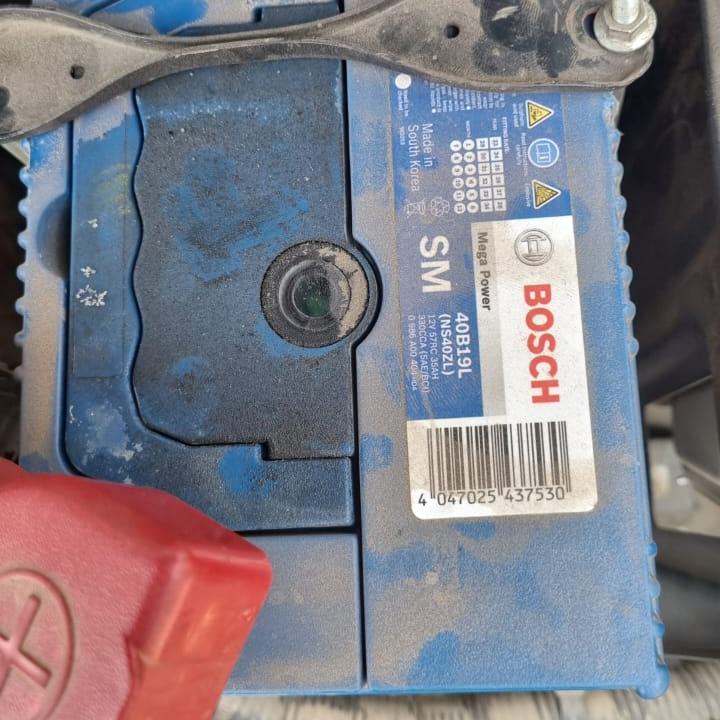
If you have ever looked at a car battery label, you have probably seen codes like 40B19L or 55B24R and wondered what they mean. These codes are a shortcut. They tell you the approximate size, the power rating and which side the positive terminal is on. Reading them correctly helps you buy a battery that actually fits.
Short version: in codes like 40B19L, the first number is a performance rating, the letter shows the case width and height class, the next number is the approximate length, and the last letter shows the terminal position.
The Japanese (JIS) style code
Many batteries sold for Japanese and Asian cars use this format. Take 40B19L as an example:
| Part | Meaning |
|---|---|
| 40 | A performance rating. It is a relative indicator of capacity and starting power, not a direct measurement in amps or amp-hours. |
| B | A letter code for the width and height of the case |
| 19 | The approximate length of the case in centimetres |
| L | The terminal position (L or R), explained below |
A higher first number generally means a more powerful battery, and a larger length number means a longer case. Batteries with the same letter share the same width and height class.
Terminal position: L or R
The last letter tells you which side the positive terminal is on when you look at the battery with the terminals on the side nearest to you. L means the positive terminal is on the left, and R means it is on the right. Using the wrong one can leave the cables too short to reach, which is unsafe.
Older or alternative names
You may also see names such as NS40ZL, which belongs to the same family of sizes as 40B19L. Different brands and years use different naming styles. If the code on your old battery does not match the new one, ask the seller for the equivalent, then check the physical dimensions and terminal layout.
Other size systems
- BCI group sizes (mostly North American cars) use numbers such as Group 35 or Group 24F.
- DIN or EN codes (mostly European cars) use a number such as 544 402 or an LN code such as LN2.
Each system describes case size and terminal layout, but the codes are not interchangeable. Always check with a cross-reference chart or a knowledgeable seller.
Other numbers on the label
- Voltage: 12 V for almost all cars.
- Ah (amp-hours): the amount of energy the battery can store.
- CCA (cold-cranking amps): the current it can deliver to start the engine.
- Date code: when the battery was made. See how to choose the right car battery.
How to use the code when buying
- Read the code on your old battery, but do not rely on it alone, as a previous owner may have fitted the wrong one.
- Check your owner's manual for the recommended size and rating.
- Measure the tray and compare length, width and height with the new battery.
- Check the terminal position (L or R) and the terminal type.
- Choose a rating that is the same or higher than the original, provided it fits.
- Check the manufacture date and warranty, and be wary of anything that looks suspicious. See how to spot fake, refurbished or old-stock tyres and batteries.
When to replace
If your battery is slow to start the car, read 7 signs your car battery is failing. Once you decide to replace it, a correct size code makes the job quick and avoids returns.