How to Read a Car Battery Label: Ah, CCA, RC and More
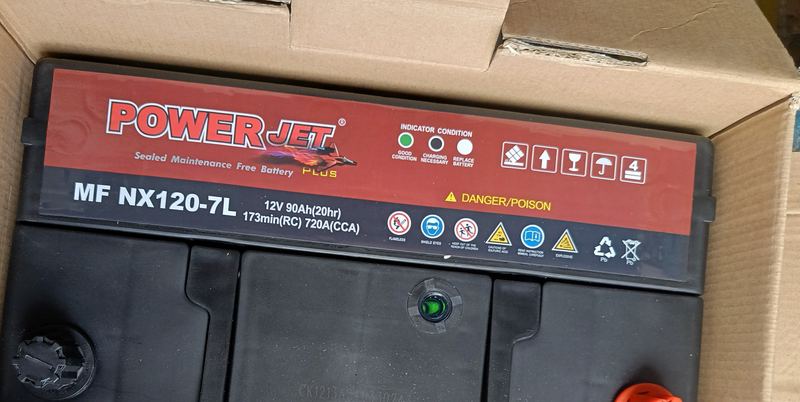
A battery label is packed with numbers and symbols, and the biggest number is not always the best choice. Knowing what each marking means helps you compare batteries fairly and pick one that suits your car. The example below is from a sealed, maintenance-free battery labelled 12V 90Ah (20hr), 173 min (RC) and 720A (CCA).
Short version: Ah tells you how much energy the battery stores, CCA tells you how well it starts the engine, and RC tells you how long it can run your car's systems if the charging fails. Compare batteries using the same standard.
The main markings
12V
The nominal voltage. Almost all car batteries are 12 volts.
Ah (amp-hours)
The battery's capacity, usually at the 20-hour rate. A rating of 90 Ah (20hr) means the battery can supply about 4.5 amps for 20 hours before it drops to its end voltage. A bigger Ah number means more stored energy. Larger engines and cars with more electrical equipment usually need more.
CCA (cold-cranking amps)
The amount of current the battery can deliver to start an engine at a low temperature, normally -18 degrees Celsius, for a short time. A higher CCA means stronger starting power. Diesel engines and large petrol engines need more. In a hot country, CCA still matters, because starting is the hardest job a battery does.
Different standards (such as SAE, EN, DIN and JIS) test in different ways, and their numbers are not directly comparable. A battery labelled with an EN rating of 600 A is not the same as one labelled with an SAE rating of 600 A. Compare batteries on the same standard.
RC (reserve capacity)
The number of minutes the battery can supply a steady 25 amps before it falls too low, if the alternator fails. A rating of 173 minutes is a lot of reserve. RC is a useful measure of how well a battery would cope if the charging system fails.
MF (maintenance-free)
The battery is sealed, so you do not need to top it up with water.
Other things on the label
- Size code: for example NS40 or NX120-7. See car battery size codes explained.
- Charge indicator: a small coloured window. The label explains what each colour means. It reads only one cell, so use it as a hint. See 7 signs your car battery is failing.
- Date code or date sticker: shows when the battery was made. Some labels use a month and year chart where the date is marked or punched. Ask the seller to show you.
- Terminal polarity: plus and minus signs, and sometimes L or R in the code.
- Safety symbols: flammable gas, eye protection, keep away from children, acid, read the instructions, and recycling.
How to use the numbers
- Find the Ah and CCA your car's manufacturer recommends, and choose a battery that meets or exceeds them.
- Check that the size code and terminal side fit your car.
- Compare ratings on the same standard.
- Check the date code and warranty.
Common mistakes
- Choosing a battery just because it has the highest number
- Comparing CCA figures from different standards
- Ignoring the physical size and terminal position
- Not checking the manufacture date
For help picking the right battery, read how to find the right battery for your car and how to choose the right car battery.