7 Signs Your Car Battery Is Failing (and How to Test It)
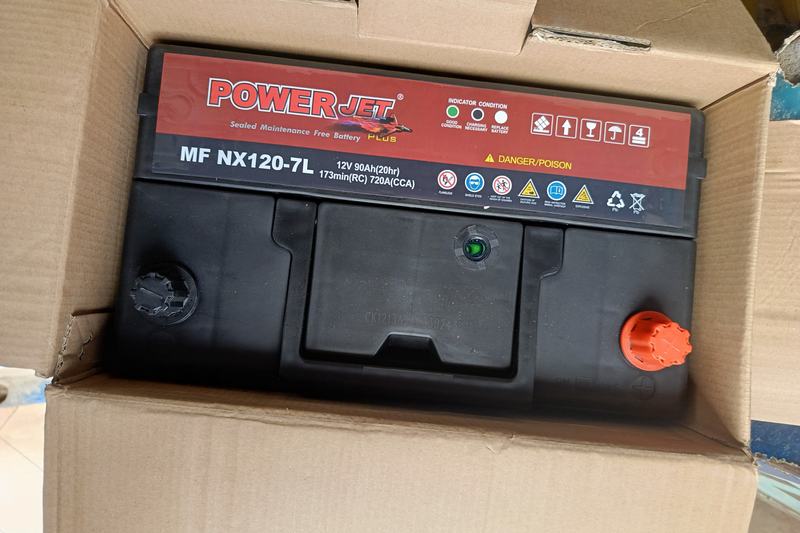
A car battery rarely fails without warning. If you know what to look for, you can replace it on your own schedule instead of being stranded with a car that will not start. In hot climates, batteries also tend to wear out sooner than the three to five years often quoted for cooler regions, so pay attention once yours passes about two to three years old.
Short version: slow cranking, dim lights and a clicking sound are the classic signs. A simple multimeter test can confirm whether the battery or the charging system is at fault.
The seven signs
- Slow cranking. The engine turns over lazily before it starts, especially after the car has been parked for a day or more.
- Dim headlights and interior lights, particularly when you start the engine or run the air conditioning at idle.
- Clicking when you turn the key. A rapid clicking sound with no engine turnover usually means there is not enough power to move the starter.
- Battery or charging warning light on the dashboard.
- Corrosion on the terminals. A white, blue or green crust around the posts stops current flowing properly.
- A swollen or leaking case. Heat can make a battery case bulge. If you see that, or smell rotten eggs, the battery is damaged.
- Age. If it is more than three or four years old and you are noticing any of the above, replacement is due.
Testing with a multimeter
A basic digital multimeter costs little and gives you real numbers. Set it to DC volts (20 V range).
Step 1: resting voltage
Turn the engine off and leave the car for a few hours. Touch the red probe to the positive terminal and the black probe to the negative terminal.
| Reading | Approximate charge |
|---|---|
| 12.6 V or higher | Fully charged |
| 12.4 V | About 75 percent |
| 12.2 V | About 50 percent |
| 12.0 V or lower | Discharged or failing |
Step 2: charging voltage
Start the engine and measure again. A healthy charging system usually reads between about 13.7 and 14.7 V. If the reading stays close to the resting figure, the alternator may not be charging. If the charging voltage is fine but the resting voltage drops overnight, the battery cannot hold a charge or something is draining it.
Battery or alternator?
If the car starts after a jump but dies soon after, the alternator is a likely suspect. If the car starts fine after a jump and keeps running, then fails to restart next time, the battery is more likely. Only a proper test will tell you for sure, and many workshops will do one for free or for a small fee.
Check the built-in charge indicator
Many sealed, maintenance-free batteries have a small round window on top. The label explains the colours. On many batteries green means good condition, black or dark means the battery needs charging, and white or yellow means it should be replaced, but always check your own battery's label. The indicator reads only one cell, so green does not guarantee that the whole battery is healthy. Treat it as a quick hint and confirm with a proper test. See how to test a car battery.
Safety when working near a battery
- Wear eye protection and gloves. Battery acid causes burns.
- Keep sparks and flames away. Batteries can give off explosive hydrogen gas.
- Do not jump-start a battery that is cracked, leaking or swollen.
- When disconnecting, remove the negative terminal first. When reconnecting, attach it last.
Our advice
We advise testing the battery and the charging system at the first sign of slow starting, such as a lazy crank or dim lights. Do not wait until the car will not start.
Making a battery last longer
- Clean corroded terminals with a mixture of baking soda and water, then dry them and tighten the clamps.
- Make sure the battery is held down firmly so it does not vibrate.
- Park in shade when you can. Heat is the biggest enemy of battery life.
- Avoid many short trips with no long drive in between, because the alternator needs time to recharge the battery.
When it is time for a replacement, read our guide on how to choose the right car battery.